Berlin Weather in October: the Good, the Bad, the Ugly

Berlin autumn weather can be difficult, to say the least. For a couple of days the sun might shine, blue skies, no cloud anywhere. And then again it’s like this: the Berlin cloud stays for days and days and the it rains and it’s windy and cold.
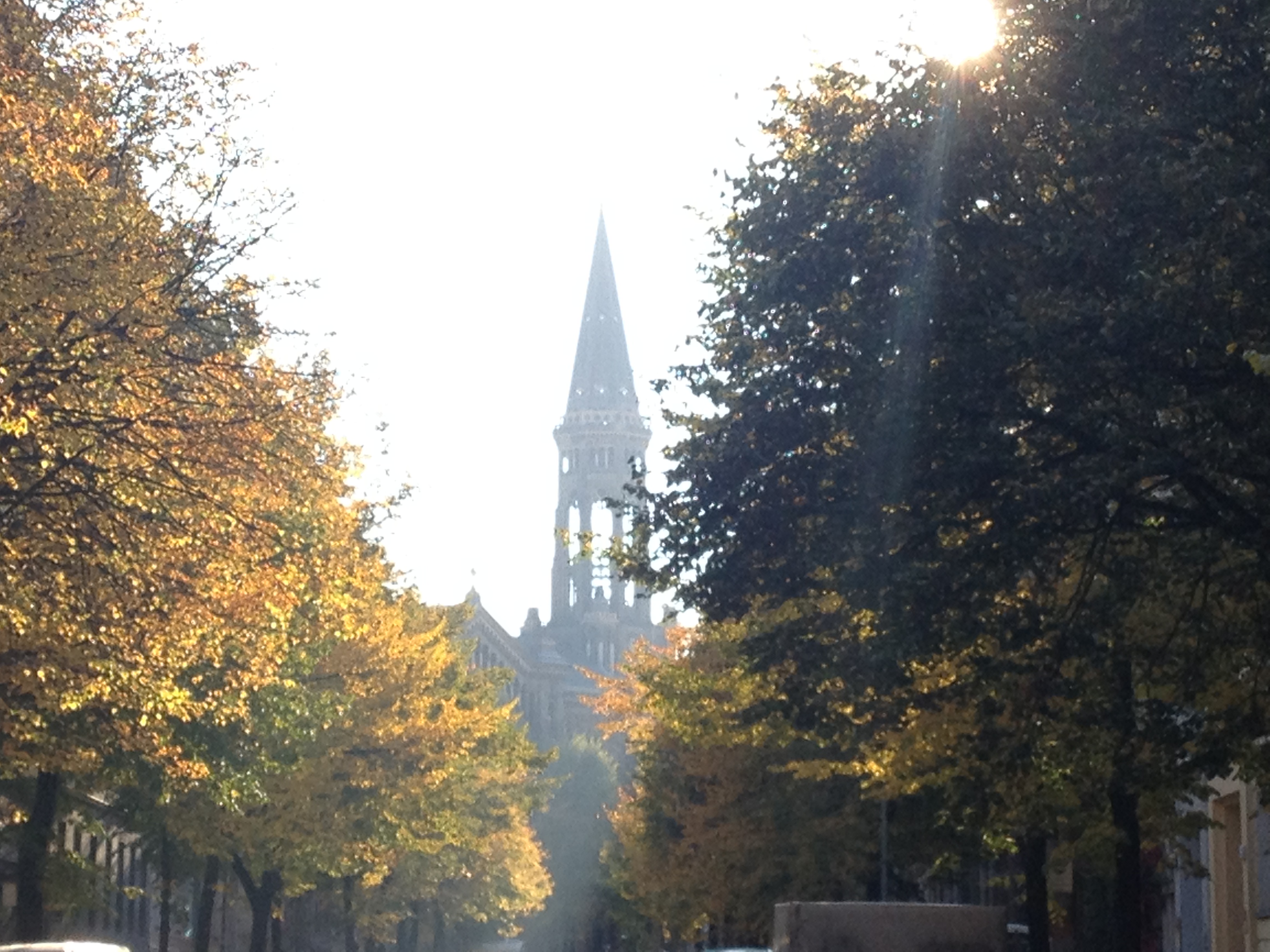
Berlin Weather October Autumn rare Sunshine, Zionskirche, Berlin Mitte

Berlin Weather in October – blue skies are rare to find – Zionskirche, Berlin Mitte – Photo: T.Bortels

The beginning of October actually had some nice days. I already hoped we would have a ‘Golden October’ – which would probably translate to Indian Summer. But now the Cloud is back – and the weather forecast does not look pretty at all. On the news they said that there might be some holes in the clouds on the weekend – but I wouldn’t bet on it.

The temperatures are still rather moderate. Only occasionally the temperature drops below 0°C during the night – which would be 32° Fahrenheit. During the day the temperature is somewhere between 5°C and 10°C (40°F – 50°F) but adding rain and wind it does actually feel slightly colder.

But whenever the sun is actually shining, it can be very nice outside. The smell of autumn is back: the combination of coal heating and wet leafs rotting on the ground is the Berlin smell I love. For me it is somehow the beginning of The Berlin Year. Winter is around the corner, but not quite here yet.

So if you are planning to visit Berlin in the coming days, you should probably bring some waterproof clothing with you – and an umbrella could also be a good idea.
Berlin’s two light festivals illuminating the city

This is again a rather typical Berlin story: Berlin now has two light festivals.

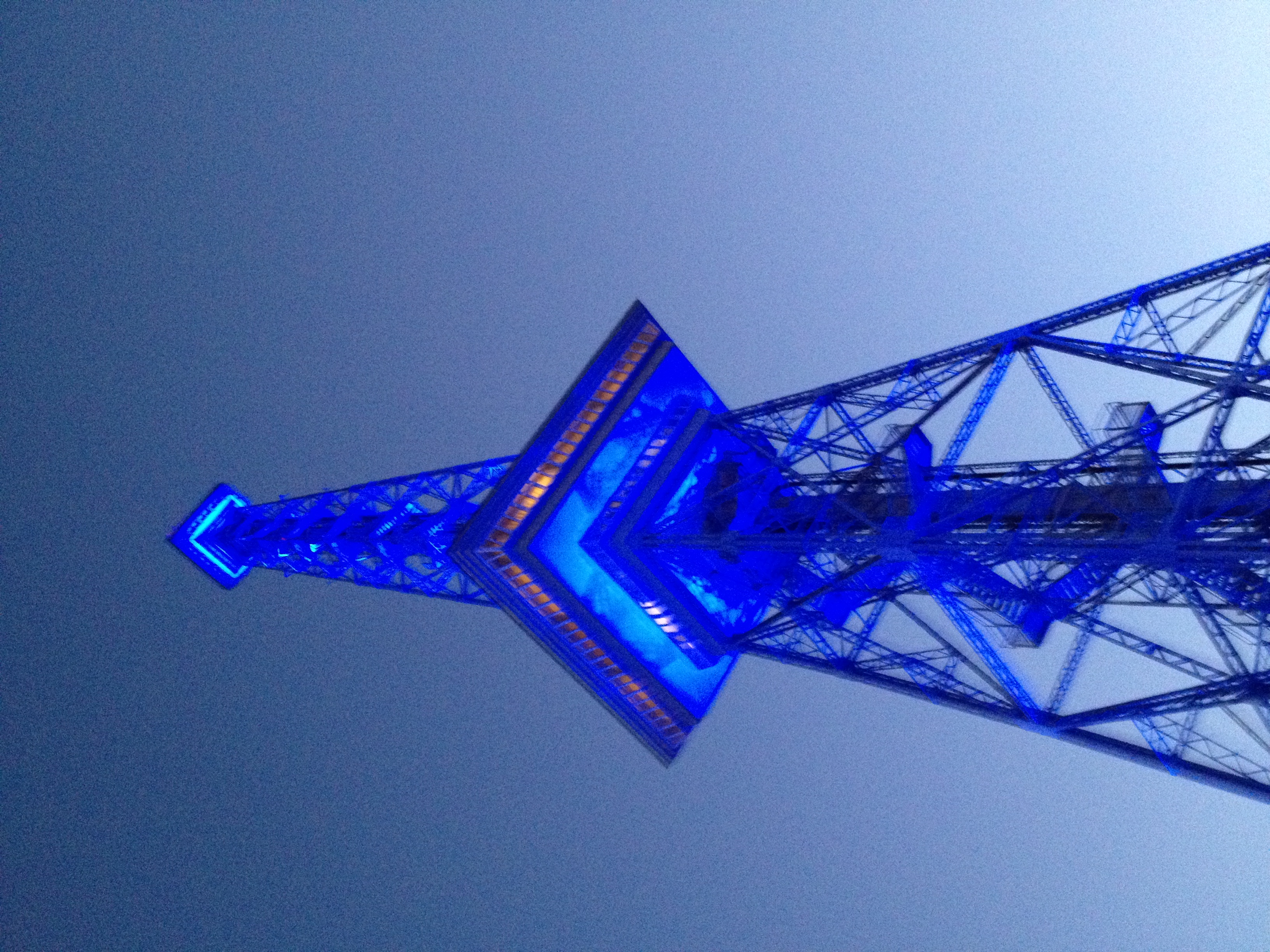
Berlin Radio Tower Funkturm - Festival of Lightslights-festival

Berlin Radio Tower Funkturm in blue – Festival of Lightslights-festival – Photo: T.Bortels

Introduced 15 years ago, the ‘original’ Festival of Lights became a huge success. October and November used to be ‘difficult’ for Berlin’s tourism business. But now every year over half a million additional overnight stays bring money to the city in times, when the streets of Berlin used to be rather abandoned.

For an outsider (like me) the development of the light festival situation seems to have some similarities to the development of the art fairs that are held in September. Once success takes control, side projects pop up – and become successful themselves. So besides the Festival of Lights there is now also the festival Berlin leuchtet / Berlin shines.

But is there any difference for the audience? Not really. You will just have to check two schedules, two maps and two festival homepage if you want to find your way through illuminated Berlin in October.

See also:

25 years of German Unity – Deutsche Einheit

I wasn’t so sure what the correct English term would actually be: German Unity? German Unification? German Reunification? Anyways – it’s now 25 years that the once divided two German countries became one. On 03 October 1990 the papers were signed – and that was that.

Such an anniversary is of course also always a good opportunity to look back: what went right? What went wrong? And what could have gone better? These days German Media is of course looking at all that. And I took the opportunity to put up another info-page with basic information about the Fall of the Berlin Wall.

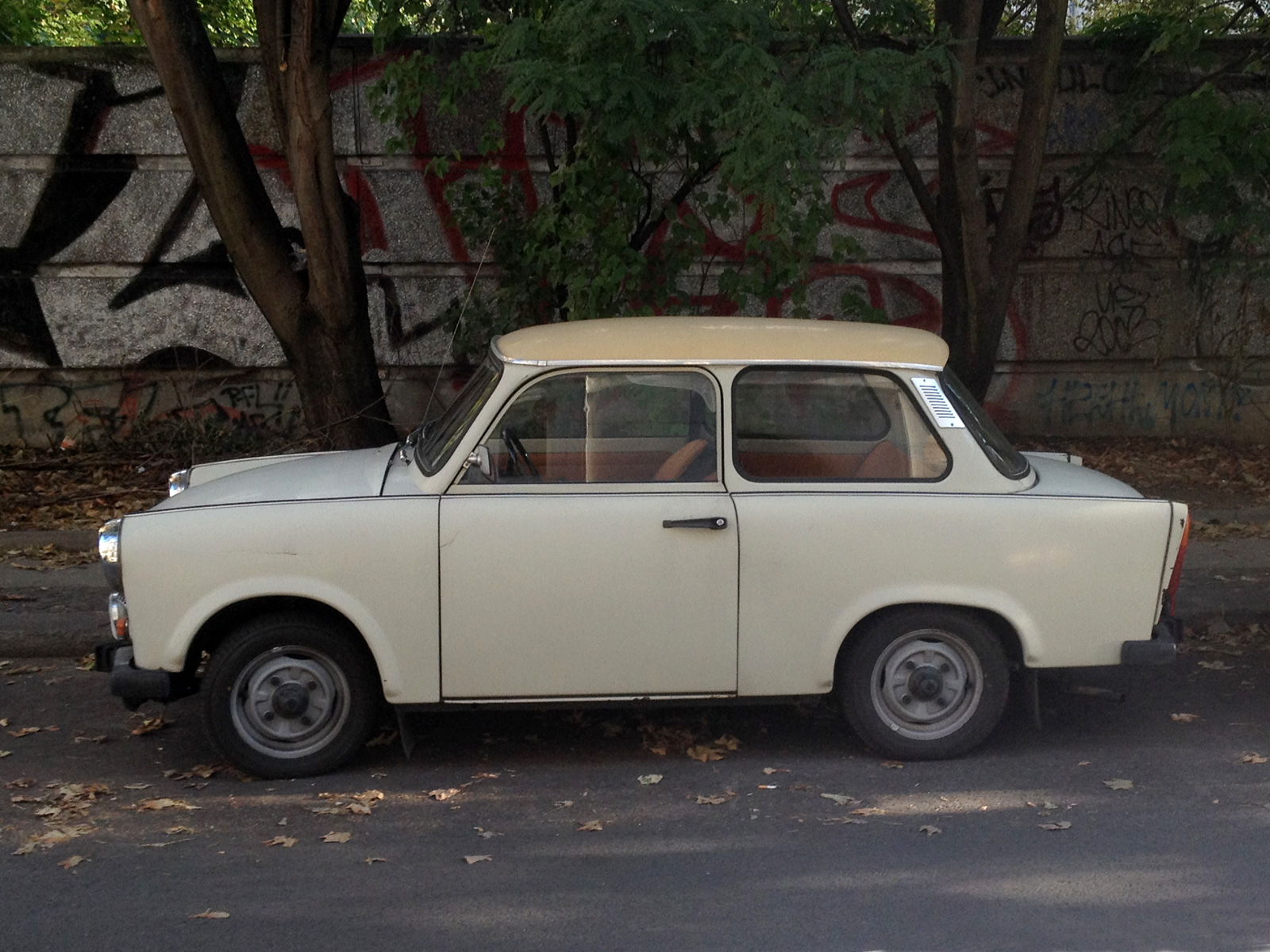
25 Years of German Unity – Photo of East German car Trabbi: Trabant 601s

Typical East German car ‘Trabbi’ Trabant 601s parked in Berlin Mitte – Photo: T.Bortels

25 years of German Unity – blooming landscapes after all?

25 years ago the West German Chancellor Helmut Kohl promised that many people would be better off (not using’ everybody’ probably was on purpose) and that we’ll soon find ‘blooming landscapes’ (Blühende Landschaften) in former East Germany. I should point out that in German that term could also refer to an economic situation – but it doesn’t have to. So today, with many East German factories closed and many people moved away that picture of ‘blooming landscapes’ can also be seen in a different light: nature. And yes, in many areas nature has recovered in East Germany – and it’s beautiful to see.

I grew up near the river Elbe. Back in the days of two Germanys, for us the river was also the border to East Germany. And it was dirty. It was basically poisoned with everything the East German chemical industry had to offer. So we basically had two common jokes: We would approach the river betting what color it would have on that day – pink? Purple? Blue? Sometimes it smelled like chlorine – sometimes worse. The other common joke was, that there would only be two species living in the river Elbe: Eels and Crabs. Each of the species living on the dead bodies of the other.

These times are over – the river has recovered – and is still recovering. And also the banks of Elbe are now finally ‘alive’ again. The walls and fences are down, nature is back – and thanks to the decades of separation most of the areas along the former death strip are now part of a green strip – ‘blooming landscapes’ of a different kind than Helmut Kohl originally thought of 25 years ago.

Berlin Weather in September: the driest, the warmest, the sunniest

Berlin Weather in September was kind of nice, but not too nice. The official statistics point out, that in all of Germany the weather conditions were a bit ‘below’ normal weather conditions: a bit colder and a bit less rain compare to previous year.

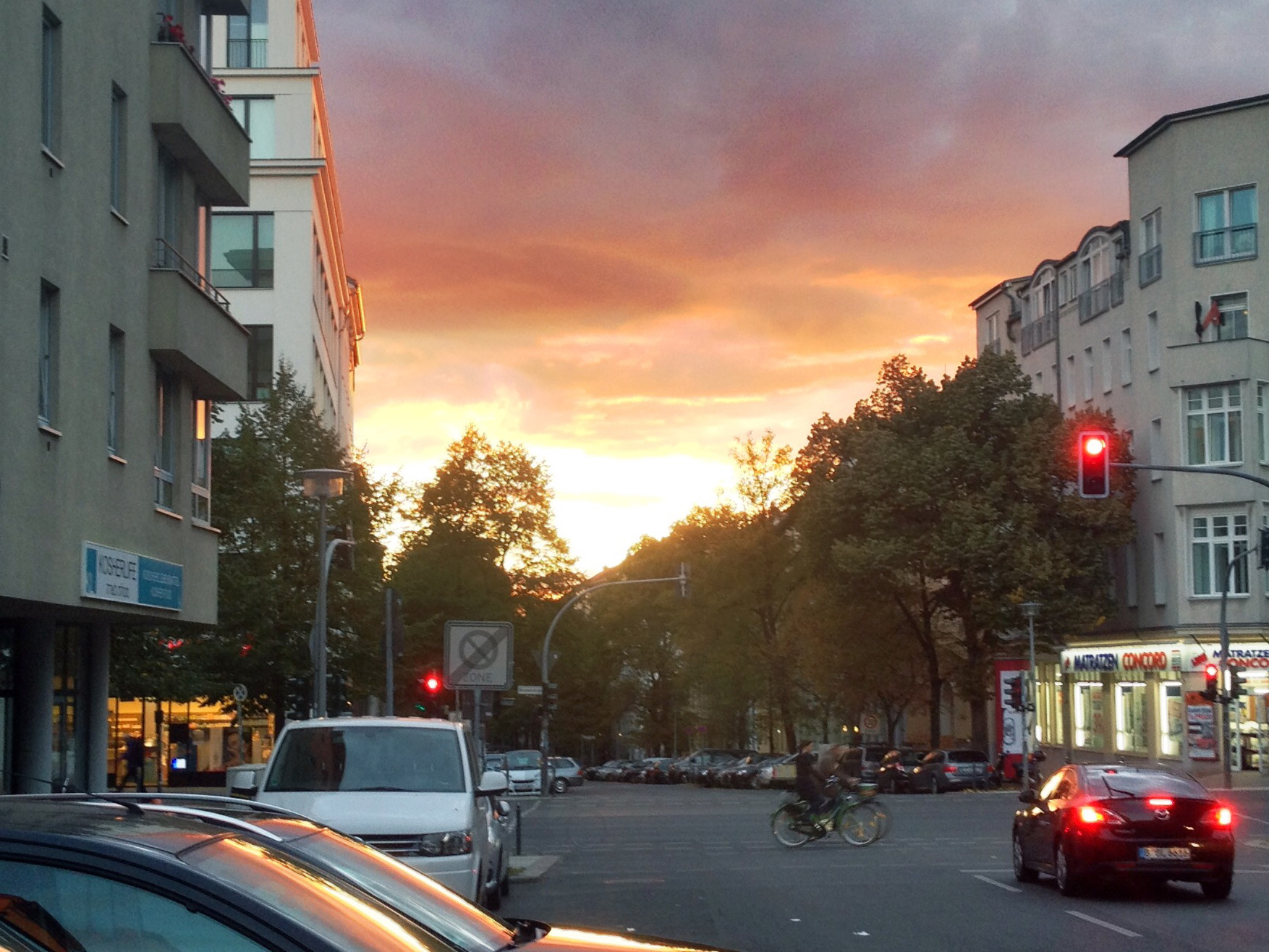
Photo: Berlin Sunset – Weather in September

Berlin Sunset – Weather in September: dry, warm and a lot of sunshine – Photo: T.Bortels

Statistically Berlin had in fact a ‘record’ September – at least compared to all other German states. Berlin’s September weather was the driest, the warmest and the sunniest.

Only 35 liters of rain made it to an average Berlin square meter. That is indeed not much if you compare it to the German average of 56 liters per square meter. The temperature however was slightly higher, than in average. Berlin had some rather comfortable 14.4°C / 58°F while Brandenburg had ‘only’ an average temperature of 14°C / 57°F. With almost 170 hours of sunshine Berlin had the most sun of all states in September – the average across Germany was around 137 hours of sunshine.

And: Berlin had some gorgeous sunsets, too. Yes indeed.

Data source: Deutscher Wetterdienst, www.dwd.de

Berlin’s new Observation Deck: the Marzahn Skywalk

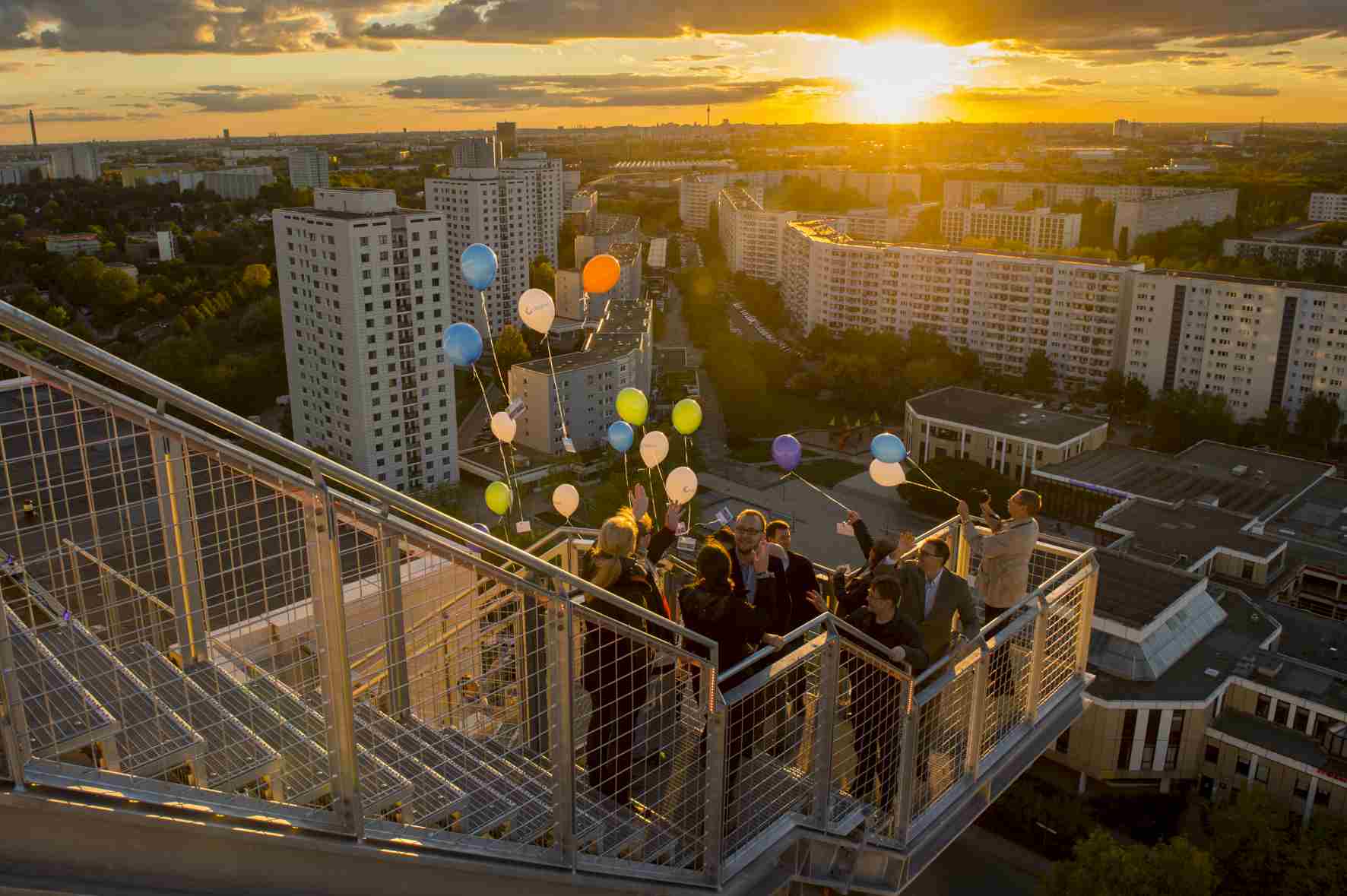
Berlin has a new tourist attraction: the Marzahn Skywalk, an observation deck on top of a high rise apartment building in Berlin Marzahn provides an unfamiliar view on Berlin.

From a height of approximately 70 meters the platform offers a view over the east Berlin borough Marzahn Hellersdorf – but basically with good weather conditions you should also be able to see as far as Teufelsberg.

Berlin Observation Deck Skywalk Marzahn

Opening of the new Berlin Observation Deck Skywalk Marzahn – Photo: © Cathrin Bach, Bild und Konzept

Admission / Tickets

The access to the platform is free of charge – but you should make a reservation in advance. You’ll find the related contact information of degewo on their website:
www.degewo.de/content/de/Unternehmen/4-1_Aktuelles/4-1-Aktuelles-2015/Skywalk-Eroeffnung.html or at the office of degewo-Kundenzentrum Marzahn.

Opening Hours

Tuesday: 10.00 – 12.00
Thursday: 14.00 – 16.00
Saturday:  10.00 – 12.00 Uhr

See also:

Original Berlin Bolle Milkman Memorial Plaque in Moabit

Today Berlin officials will unveil a memorial plaque in honor of Berlin’s original milkman Carl Bolle (1832-1910). The memorial plaque will be situated in Moabit, Alt Moabit 98, near the grounds where Bolle’s dairy empire was operating some 130 years ago (opened in 1879).

Around 1880 Carl Bolle was basically the first, who bought milk from farmers around Berlin and sold it in the streets of Berlin. Milk became his business – and it became a big business: over the years Bolle had a growing fleet of horse powered cars and wagons that were used to get the milk to the city and then sell it. In 1910 his company owned already 250 horse powered milk trucks – over 2000 ‘Bolle Boys’ and ‘Bolle Girls’ were busy selling milk.

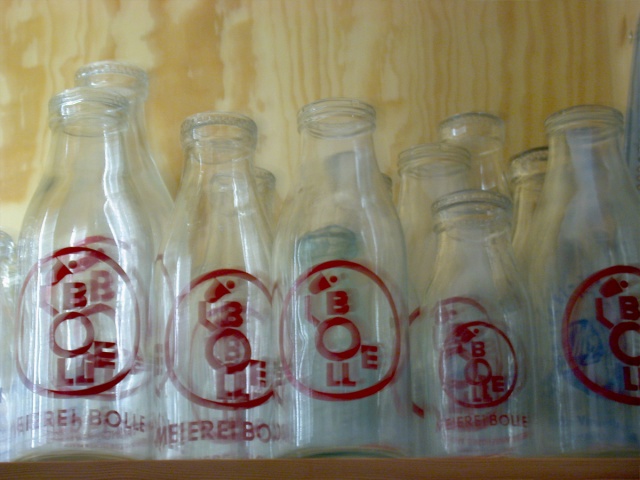
Bolle Logo on Milk Bottles Berlin

Bolle logo on empty milk bottles at Museum der Dinge, Berlin Kreuzberg – Photo: T.Bortels

Basically ‘every’ Berliner knows Bolle. There are various stories and legends – and even a song about about the original Berlin Milkman. Carl Bolle’s sons later continued the milk business and over the years they turned it into the Berlin supermarket chain “Bolle”.

Today milk bottles featuring the original Bolle Logo can still be found at least in museums – for example at Museum der Dinge in Oranienburger Strasse, Kreuzberg. And if you happen to see one of those bottles at a flea market, then I would recommend to buy it.

Berlin Marathon Weekend – and how to get around

Every year on the last weekend of September the Berlin Marathon is held – and it can become a bit difficult, to get from A to B. The actual Marathon is held on Sunday – but since the actual Marathon is not the only Marathon this weekend, there are probably more streets closed than on any other weekend during the rest of the year. Let’s have a look at what is closed – and how to literally get around…

First things first: U-Bahn and S-Bahn are probably the most reliable means of transportation over the Marathon Weekend. So if you need to go to the Airport or catch a train, you better neither try to get there in time by bus, by tram or by Taxi – unless you’re sure you’re not crossing paths with the Marathon route.

Continue reading

Statistics: Traffic Accident Casualties in Berlin 1995 – 2014

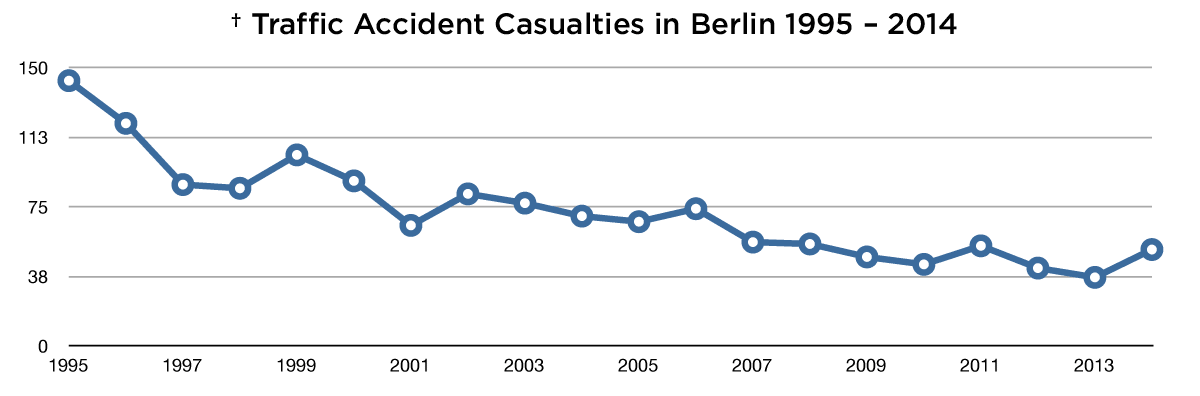
The Berlin office for statistics Amt für Statistik Berlin-Brandenburg have recently released numbers about traffic accidents in Berlin. The good news is: the overall trend seems to be that numbers are declining.

statistic of fatal traffic accidents: casualties in berlin

graph of fatal traffic accidents in Berlin: casualties between 1995 – 2014 // data CC BY Amt für Statistik Berlin-Brandenburg // graph by nuberlin.com

While in 1995 over 140 people died in traffic accidents in Berlin, about 20 years later that number is down to ‘only’ 52 casualties. The bad news: that is still one person killed in Berlin traffic each week!

Continue reading